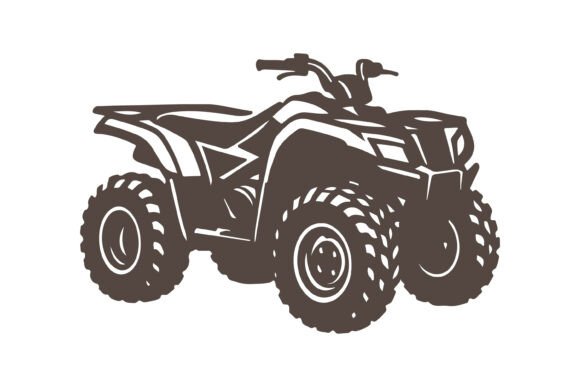
Quad Silhouette Vector Clipart Review
As a designer who has spent years navigating the fine line between digital art and physical thread, I approach every new asset with a critical eye. The market is flooded with Graphics that look stunning on a screen but fall apart when translated into a machine embroidery design. Today, I am putting Quad Silhouette Vector Clipart through its paces to see if it holds up for real-world projects. This isn't just about downloading a file; it is about understanding how this specific shape behaves when stitched onto fabric, how it impacts your brand, and whether it belongs in your next commercial collection.
First Impressions: Mood and Visual Weight
When I first opened the file, the immediate impression was one of bold simplicity. As an Illustrations piece, Quad Silhouette Vector Clipart relies on clean lines and distinct geometric forms. In the world of embroidery project planning, this is often a good sign. Complex, overly detailed artwork can lead to registration issues and tangled threads, but silhouettes tend to translate well into solid fill stitch areas. The mood it creates is modern and graphic, making it instantly adaptable for a wide range of audiences, from edgy streetwear brands to minimalist nursery decor.
The layout suggests versatility. Because the design is built around a quad structure, it offers natural balance. For a small business owner looking to create a cohesive line of products, this symmetry is invaluable. It feels like a design asset that could anchor a logo or serve as a standalone statement piece without overwhelming the garment. However, the true test lies not in the preview image, but in how the stitches interact with different materials.
Real-World Application: From Screen to Stitch
Let's imagine a specific scenario: I am preparing a custom embroidered tote bag for a local boutique client. They want something trendy but durable enough for daily use. I load Quad Silhouette Vector Clipart into my software and begin mapping out the stitch density. Here is where the practical judgment comes in. If I were to apply this directly to a heavy canvas tote bag, the solid silhouette would likely require a dense fill stitch to prevent the fabric from showing through. The result would be a crisp, high-contrast tote bag design that commands attention.
Now, consider shifting this same design to a soft cotton sweatshirt. The challenge changes immediately. On stretchy fabric, large blocks of stitching can cause puckering if the stabilizer isn't chosen correctly. With Quad Silhouette Vector Clipart, the clean edges mean that a tear-away stabilizer might suffice for lighter fabrics, but for a premium feel on a sweatshirt, I would recommend a cutaway stabilizer to maintain the integrity of the sweatshirt embroidery. The design's sharp corners are a double-edged sword; they look great digitally, but in thread, tight corners can sometimes pull or distort if the machine tension isn't perfect. A professional touch involves slightly rounding those corners in the digitizing process before hitting the "start" button.
Navigating Challenges: Fabric and Scale
While Quad Silhouette Vector Clipart is versatile, there are specific situations where caution is required. One major area of concern is scale. If you attempt to shrink this design for a small hoop size, such as on a baby onesie or a cap, the details may become lost. Baby embroidery requires softness and clarity; a design that is too small might turn into a blob of thread rather than a recognizable shape. Always check the dimensions against your hoop size before committing to a production run.
Another critical factor is fabric texture. On textured fabrics like denim or thick wool, the smooth lines of the silhouette will stand out beautifully. However, on very thin or sheer fabrics, the density required to fill the quad shapes might make the back of the garment stiff. This is a common pitfall for new Etsy sellers trying to maximize product variety. If you plan to use this on delicate materials, consider using a satin stitch border instead of a full fill to reduce bulk while maintaining definition.
Dark fabrics also present a unique challenge. While Quad Silhouette Vector Clipart works well on dark backgrounds with light thread, the contrast must be managed carefully. High-density fills on dark fabric can sometimes show the backing material if not stabilized properly. Testing the design on scrap fabric first is non-negotiable. Check the thread colors, inspect small details, and ensure the finished product looks as professional as the digital mockup suggested.
Business Value and Customer Perception
For creative entrepreneurs and handmade shop owners, the choice of design assets directly influences customer trust and perceived value. A well-executed embroidered patch or personalized gift using Quad Silhouette Vector Clipart signals quality. Customers today are savvy; they can tell the difference between a rushed job and a thoughtfully digitized piece. When the stitching is clean and the design sits flat on the fabric, it elevates the entire finished product.
This particular clipart fits perfectly into the category of timeless graphics. Unlike trend-heavy illustrations that date quickly, a strong silhouette has longevity. This makes it an excellent investment for commercial embroidery projects where you need to sell items over multiple seasons. Whether you are creating holiday gifts, wedding favors, or everyday apparel, the design's adaptability allows you to pivot quickly based on market demand without losing brand consistency.
Practical Designer Notes for Success
- Test First: Always run a test on scrap fabric that matches your final project material. This helps you adjust stitch density and tension before cutting into expensive inventory.
- Stabilizer Matters: Do not skip the stabilizer. For Quad Silhouette Vector Clipart, especially on stretchy or knit fabrics, a proper stabilizer prevents distortion and ensures the design lays flat.
- Color Contrast: Plan your thread colors carefully. High contrast usually yields the best visual impact for silhouette designs, ensuring the shape pops off the background.
- Licensing Check: Before selling any handmade product or digital file containing this design, confirm the licensing terms. Ensure you have the right to use it for commercial purposes, whether for custom apparel or printable mockups.
- Hoop Size Verification: Confirm that the design fits within your machine's hoop limits. Resizing a vector file is easy, but resizing a digitized embroidery file requires care to avoid stitch errors.
Final Verdict on Utility
In conclusion, Quad Silhouette Vector Clipart is a robust tool for designers who understand the mechanics of thread and fabric. It is not a magic bullet that solves every design problem, but it provides a strong foundation for creating high-quality personalized gifts and small shop products. Its strength lies in its simplicity and adaptability, making it suitable for everything from kitchen towels to aprons and beyond.
If you are an Etsy seller or a craft business owner looking to expand your catalog with reliable, professional-looking assets, this design deserves a spot in your library. Just remember that the success of the project depends less on the file itself and more on your execution. By respecting the limitations of the medium—checking your hoop size, choosing the right stabilizer, and testing thoroughly—you can transform this digital graphic into a tangible, high-value item that customers will love. The journey from a vector file to a beautiful embroidery file is where the real artistry happens, and with Quad Silhouette Vector Clipart, you have a solid partner for that journey.