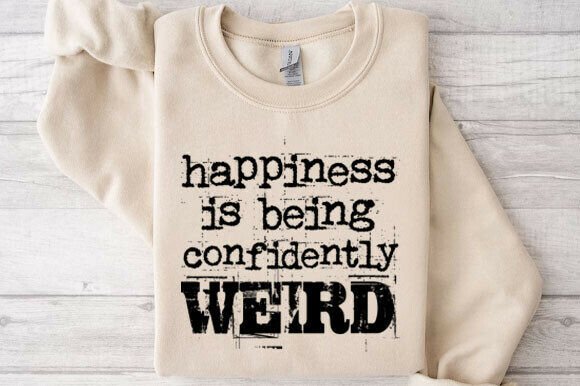
Happiness is Being Confidently Weird: A Designer's Review
As a professional who has spent years translating digital files into tangible thread and fabric, I approach every new machine embroidery design with a mix of curiosity and skepticism. The market is flooded with generic clip art, so finding a piece with genuine personality is rare. When I first opened the file for Happiness is Being Confidently Weird, my immediate reaction was relief. It captures a specific, relatable mood that resonates deeply with the modern crafter and the customer looking for something beyond the standard slogan. This isn't just another golf pun; it is a statement piece that balances humor with self-acceptance.
The Visual Impact and Design Personality
The layout of Happiness is Being Confidently Weird is deceptively simple yet visually effective. The typography does not compete with the central imagery; instead, they work in harmony to create a cohesive Graphics element suitable for apparel. The phrase itself suggests a playful energy, which translates well into the bold lines and clear shapes required for high-quality stitching. In the context of T-Shirt Designs, this type of layout allows the text to be legible even from a distance, while the accompanying golfer imagery adds a layer of wit that invites a second look.
For those of us creating handmade products, the visual weight of this design is perfect for chest placements on sweatshirts or the center of tote bags. It avoids the trap of being overly intricate, which often leads to registration issues on home machines. The clean vectors suggest that when converted to an embroidery file, the transition between fill stitch and satin stitch will be smooth, minimizing the risk of puckering on lighter fabrics.
A Real-World Application: The Custom Sweatshirt Project
To truly understand the potential of Happiness is Being Confidently Weird, I imagined a recent client request. A local boutique owner wanted to create a limited run of hoodies for her "Golf & Chill" holiday event. She needed something that felt personal but also professional enough for a small shop product line. I selected this design for a mock-up on a heather grey crewneck sweatshirt.
In this scenario, the design shines. The contrast of white thread against the grey fabric makes the text pop, ensuring the message is clear. Because the design is not overly dense, it breathes well on the thicker fleece material, avoiding the stiff, plastic-like feel that sometimes plagues heavy commercial embroidery. If I were selling these as a personalized gift, the unique angle of the design would likely spark conversation among recipients. It feels less like mass-produced merchandise and more like a curated item from a creative entrepreneur who understands their audience.
This same design could easily transition to an embroidered patch application. Imagine a denim jacket adorned with this motif, stitched with a satin border. The durability of the design ensures it can withstand the wear and tear of daily use, making it a viable option for durable goods like caps or aprons.
Navigating Technical Challenges and Fabric Choices
While Happiness is Being Confidently Weird is versatile, experienced designers know that no design is universal. There are specific situations where caution is required. For instance, if you plan to use this on very thin or stretchy fabrics, such as jersey tees or silk blends, the stitch density must be carefully managed. Without the proper stabilizer, the tension from the fill stitches could distort the fabric, ruining the fit of the garment.
Another critical consideration is the hoop size. While the design appears compact, always verify the dimensions before starting your project. Attempting to force a larger design into a small hoop can lead to uneven tension and poor registration. If you are working on curved surfaces like baseball caps, ensure the digitization accounts for the curvature to prevent the text from distorting. Additionally, on dark fabrics, the choice of thread colors becomes paramount. A light background underlay might be necessary to make the white or pastel threads stand out without bleeding through to the front of the shirt.
Textured fabrics, such as corduroy or heavy canvas used for tote bag designs, present their own challenges. The needle must penetrate the weave cleanly, and the design should not rely on tiny details that might get lost in the fabric texture. Fortunately, the bold nature of Happiness is Being Confidently Weird mitigates this risk, but a test run is always advisable.
Practical Notes for the Professional Maker
Before committing to a full production run or listing this as a digital product, there are several steps I recommend for any serious Etsy seller or craft business owner:
- Test on Scrap Fabric: Always run a sample on the exact fabric and stabilizer combination you intend to use. Check for pulling, skipped stitches, or excessive jump lines.
- Verify File Formats: Ensure the digital embroidery file formats provided (such as DXF or PDF) are compatible with your cutting machine or embroidery software. Not all files convert perfectly without manual adjustment.
- Check Licensing: If you plan to sell finished items, confirm the licensing terms. Some design assets allow for personal use only, while others grant commercial rights for handmade goods.
- Review Color Contrast: Create printable mockups in black and white to see how the value of the design holds up without color distraction.
- Inspect Small Details: Zoom in on the digitized version to ensure no tiny letters or fine lines will become unreadable after stitching.
Final Verdict on Commercial Viability
Ultimately, Happiness is Being Confidently Weird offers a strong balance of aesthetic appeal and practical utility. It is a design that respects the limitations of embroidery while maximizing its expressive potential. For the small shop product creator, it provides a reliable way to add value to basic garments, transforming a plain sweatshirt into a conversation starter.
The design fosters a sense of community and shared humor, which is essential for building brand consistency in the handmade market. Whether you are creating a baby embroidery item for a young golfer, a holiday embroidery gift for a friend, or a staple item for your boutique, this graphic delivers. It stands out because it feels authentic, not manufactured. By paying attention to technical details like stabilizer choice and thread selection, you can ensure that the final finished product reflects the quality and care expected by today's discerning buyers.
In a world of endless options, choosing a design with character like this one can significantly boost buyer engagement. It proves that even a simple pun, when executed with precision and style, can become a standout piece in any collection. As I move forward with my own projects, I am confident that this design will remain a go-to asset for clients seeking something fun, functional, and undeniably stylish.